Hijama, done properly and explained before it starts
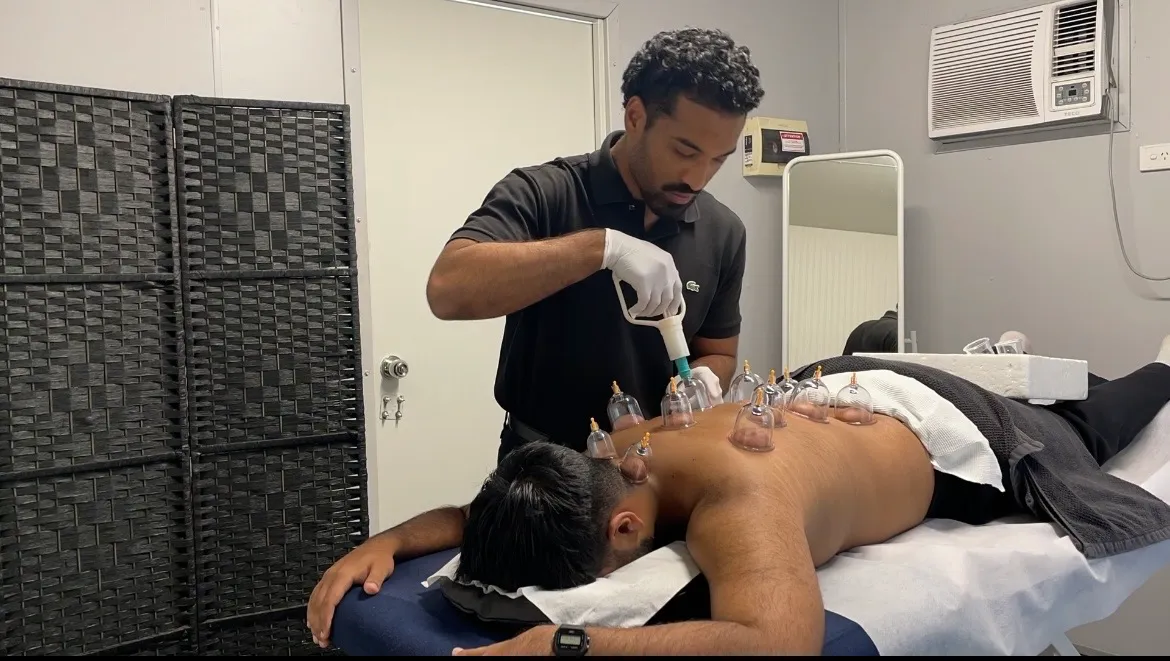
Hijama is a traditional wet cupping practice many families already know. Suction lifts the tissue, very small superficial incisions are made, and a small amount of blood is drawn with the cups.
If you have never had it done, the part that matters most is what happens before the cups go on. You get the whole process explained, in plain words, and nothing begins until you have had your questions answered and signed consent.
- $95 a session
- 30 to 40 minutes
- All three clinics
- No referral needed
Why people come in for it
For many of the people I see, Hijama is already part of family life, a practice they grew up around and come back to through the year. Others arrive at it the way they would arrive at any bodywork: something has felt tight, heavy or slow for a while and they want to do something about it.
I am not going to tell you it fixes everything, and I would be wary of anyone who does. What I can tell you is exactly what happens, who it tends to suit, and what most people notice afterwards, so you can decide with clear eyes.
What most people notice
Lighter and looser through the area worked on, often calmer for a day or two, and sometimes a bit tired that evening. It is not a way of investigating something new or worsening. If a symptom is unexplained, get it looked at properly, and I will tell you if that is where we are.
People usually book it for
- Tight shoulders, neck and upper back that keeps returning
- Recovery after heavy training, or a body that feels slow to bounce back
- Tension headaches and a jaw that clenches
- Feeling heavy, sluggish or run-down through a long stretch of stress
- General wellbeing, kept up as a seasonal practice
- Alongside a naturopathic plan, when recovery and circulation are part of the picture
Whether it suits you on the day comes down to screening. What I check first.
What happens in a session
Five steps, in this order, every time. Nothing is skipped because you are in a hurry or because you have had it done before.
-
1
Screening and history
Before a cup comes out of the packet we go through your medical history, medications, recent blood results and anything else relevant. If screening rules Hijama out on the day, there is no charge.
-
2
Consent, in writing
I explain what I am going to do, where, and why, and you sign consent before we start. Questions are welcome at any point, including halfway through.
-
3
Points chosen for you
Points are selected around what you have actually come in for, and I talk you through each one rather than working to a fixed map.
-
4
Suction, then small incisions
Dry suction first so the tissue lifts, then very small superficial incisions, then the cups go back on briefly. Most people describe that part as a scratch rather than a cut.
-
5
Clean up and aftercare
Sites are cleaned and dressed, everything used goes into clinical waste, and I talk you through exactly what to do over the next day or two before you leave.
What is actually happening in the tissue
Almost everyone pictures this wrong, usually deeper and more violent than it is. Step through it and see how far into the skin any of it reaches.
- Fat cells
- Connective tissue strands
- Small artery, blood in
- Small vein, blood out
- Capillary loops in the skin
Simplified cross-section, drawn to make the depths clear. Real layer thickness varies from person to person and site to site.
The layers, top to bottom
Tap a layer to find it in the diagram. The short version: cupping works on the top two, and the blade only ever reaches the first.
The cup goes on the skin
A sterile single-use cup is placed over the area we agreed on. Nothing has been broken, nothing has been drawn. At this point it is a piece of plastic resting on your back.
Depth: On the surface only.
This is a description of what the cup does mechanically, not a claim about treating any condition. If you want the honest version of what people notice afterwards, it is further up the page.
Read the article: where the cups go, and what one practitioner saw in the blood
Safety, hygiene and consent
- Sterile and single-use Cups, blades and gloves are opened in front of you and disposed of straight after your session. Nothing is reused between people, ever.
- Screening and consent first Every session starts with history, screening and written consent, and nothing begins until you have had your questions answered.
- Clinical waste disposal Blood stays in the single-use cups and goes into a clinical waste bin, collected through the clinic’s medical waste service.
- Unhurried, 30 to 40 minutes The fee covers the whole session including consent, point selection and aftercare, not just the cups.
Tell me beforehand if any of these apply
None of these are automatically a no, but they change how, or whether, we proceed.
- Blood thinners or a bleeding disorder
- Diabetes
- Anaemia or a recent low iron result
- Active skin infection or broken skin at the site
- Recent surgery or an open wound
- Feeling unwell, or fasting from fluids that day
If screening rules Hijama out on the day, there is no charge.
The next 48 hours
Most people feel light, and sometimes a little tired, for the rest of the day. I go through all of this with you before you leave.
-
Light activity for 24 hours
Skip heavy lifting and hard training for the rest of the day and the next.
-
Keep the sites clean and covered
As directed, and leave saunas, hot baths and swimming until the following day.
-
Eat and hydrate properly
Something substantial afterwards and plenty of water through the day.
-
Marks fade like a bruise
Circular marks are normal, usually gone within a few days and occasionally up to two weeks.
-
★★★★★
“My body and mind feel extremely relaxed after it. I had been suffering from tight hips and back pain for about a year.”
Roberto Araneda
First Hijama session -
★★★★★
“As a first-timer he made me feel very comfortable and took the time to ask all the right questions.”
Adz
Hijama, then naturopathy -
★★★★★
“Imaad was extremely professional, talked me through the process and made sure I was comfortable throughout. Left feeling noticeably lighter.”
Corey Ohlson
First Hijama session
Google reviews for Imaad Karim at Masnad Health Clinic. Quotes shortened for length.
Ready when you are
Hijama on its own, or alongside a naturopathic consultation if you would like both looked at together.
Everything people ask before a first session
Including the ones people feel awkward asking. If yours is not here, call or text and ask it directly.
Read: where the cups go, and what one practitioner saw in the blood
-
Does it hurt?
The cups feel like firm suction, which most people find oddly relieving. The incisions underneath are tiny and quick, more like a scratch than a cut, and they are over in seconds. Tell me at any point if something is uncomfortable and I adjust the suction or stop.
-
How much blood is actually drawn?
A small amount, and far less than people expect, usually well under what you would give at a blood donation. It varies with how many points we use and how your body responds on the day. I watch how you are going throughout and stop early rather than push on.
-
What happens to the blood afterwards?
It stays in the single-use cups and goes straight into a clinical waste bin, which is collected through the clinic’s medical waste service. Nothing is kept, reused, examined or handled outside that process.
-
What is recovery like, and will it leave marks?
Most people feel light, and sometimes a little tired, for the rest of the day. Circular marks are normal and fade like a bruise, usually within a few days and sometimes up to two weeks. Keep the sites clean and covered as directed, skip heavy lifting and hard training for 24 hours, and leave saunas, hot baths and swimming until the next day.
-
Is it hygienic?
Cups, blades and gloves are sterile and single-use, opened in front of you, and everything is disposed of straight after your session. Nothing is reused between people, ever.
-
Who should not have Hijama?
Screening covers blood thinners and bleeding disorders, diabetes, anaemia or a recent low iron result, active skin infection at the site, and a few other situations. Tell me about these beforehand. If the screening rules it out on the day, there is no charge.
-
How do I prepare?
Come hydrated and not fasting from fluids, and have something light to eat beforehand rather than arriving on an empty stomach. Wear loose, comfortable clothing, since most people undress to the waist for the session and you will want something easy to put back on afterwards. You stay covered apart from the area being worked on. Bring a list of medications, supplements and any recent blood results.
-
Can I have it while fasting?
Many people prefer to have it while fasting or shortly after. If you are fasting, say so when you book and we will pick a time of day that leaves you able to eat and rehydrate soon afterwards.
-
How often can I have it done?
It depends on why you are having it. Some people come seasonally, others every few months, and some just once for a specific complaint. I would rather space sessions sensibly around what your body is doing than put you on a schedule.
-
How is it different from normal cupping?
Dry cupping is suction only, which is what most people have had at a physio. Hijama adds very small superficial incisions so a small amount of blood is drawn with the suction. That is the difference, and it is why screening and consent come first.